How it works
Technology that listens before it responds
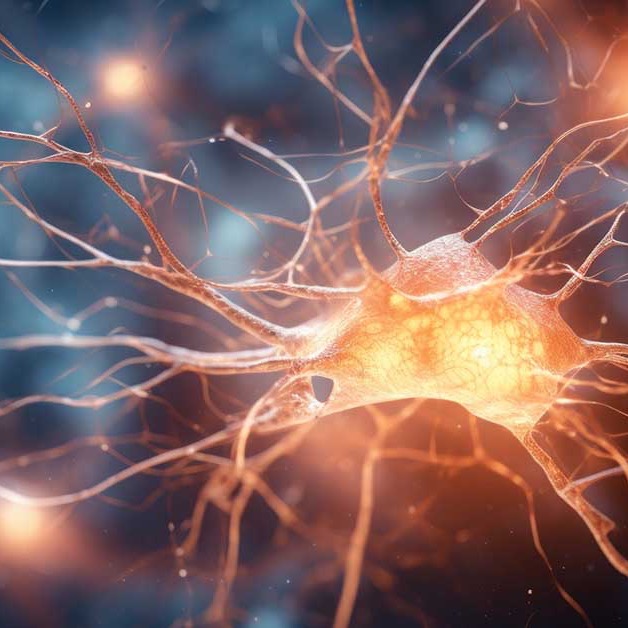
Your body runs on tiny electrical signals. The Electro-Equiscope® reads them in real time and answers with precisely calibrated microcurrent.
What is the Electro-Equiscope®?
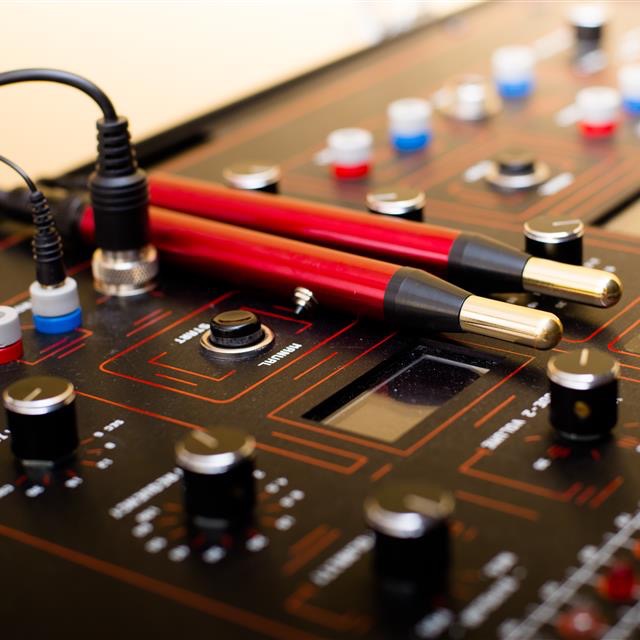
The Equiscope is a non-invasive wellness support system designed to support neurological, musculoskeletal and metabolic function. It builds on decades of earlier microcurrent technologies, combining them into one portable, biofeedback-driven instrument.
Microcurrent is very gentle — measured in millionths of an amp. Most people feel little or nothing during a session other than a sense of calm.
Three steps, repeated in milliseconds
1
Read
Small plates and probes, placed on the skin with a conductive gel, measure your tissue’s bioimpedance — how easily electrical signals are moving through it.
2
Adjust
Using its proprietary biofeedback technology, the Equiscope continuously adjusts its output to match what it reads — changing in milliseconds as your body responds.
3
Support
The result is a precisely dosed microcurrent designed to support circulation and the body’s natural restorative processes at the cellular level.
The science behind it
Every cell in the body carries a small electrical charge, and nerves communicate through electrical signals. In 1991, Erwin Neher and Bert Sakmann won the Nobel Prize for showing how to measure the tiny currents — trillionths of an amp — that flow through single ion channels in cells. Microcurrent technology builds on this understanding of the body’s bioelectric nature.
Bioimpedance
The resistance tissue offers to an electrical signal. The Equiscope reads it continuously to set the right dose.
Microcurrent
Current in the millionths of an amp — close to the body’s own electrical scale, and far gentler than a TENS unit.
Biofeedback
A closed loop: the device reads, responds, and reads again, so each session adapts to you.
Have questions before you book?
Call or text Shannon — happy to talk it through.

